
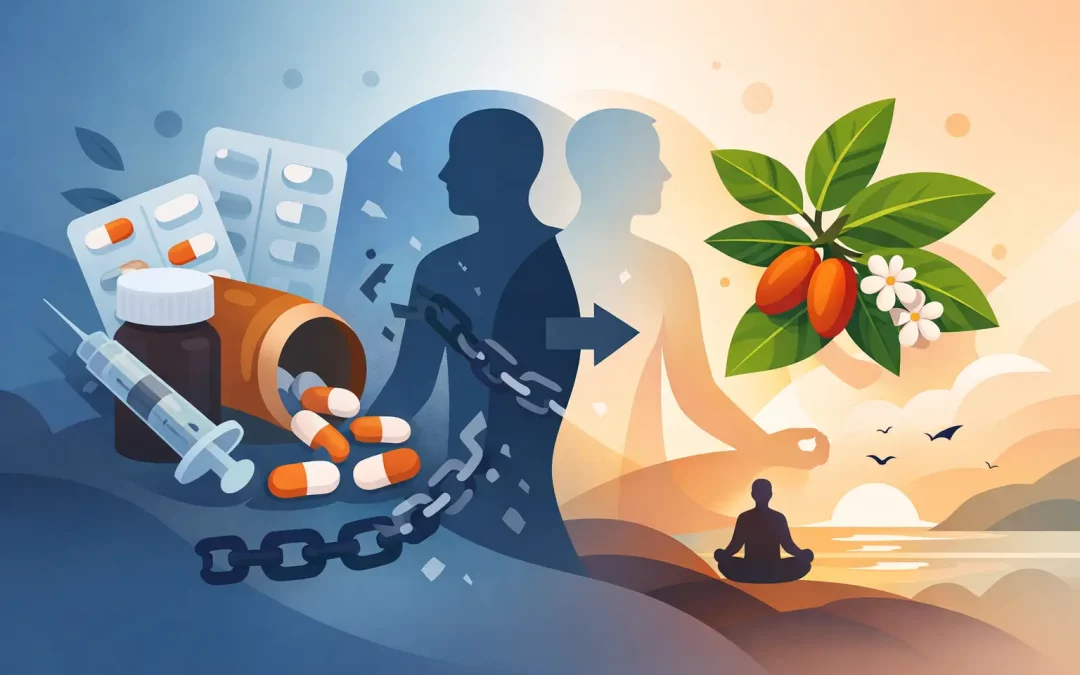
Methadone can help people stabilize after opioid dependence, but getting off methadone is often its own battle. Many people already know this firsthand. They have tried tapering for months, sometimes years, only to get trapped in the same cycle – dose reductions, insomnia, anxiety, body pain, cravings, and then the fear of feeling sick enough to go backward.
That is why methadone detox with ibogaine has become such an important conversation. For the right candidate, ibogaine may offer something conventional detox often does not: a real interruption of withdrawal, a noticeable reduction in cravings, and a powerful opening for emotional and spiritual reset. For people who feel like they have been surviving instead of living, that opening matters.
Why methadone is so hard to come off
Methadone is long-acting, which is part of why it can be effective in maintenance treatment. It helps reduce instability, but it also creates a dependency pattern that can be especially difficult to unwind. Withdrawal can be delayed, prolonged, and emotionally draining. Unlike short-acting opioids, methadone often lingers in the body, and symptoms can stretch on in a way that leaves people depleted before they have even reached the other side.
This is where many standard detox plans fall short. A person may be told to taper slowly, switch medications, or simply prepare for discomfort. For some, that works. For others, it becomes another exhausting chapter in a long recovery story. The issue is not lack of willpower. It is that methadone withdrawal can be physically intense, mentally destabilizing, and deeply discouraging.
How methadone detox with ibogaine works
Ibogaine is a naturally derived psychoactive compound that has drawn attention for its unique effects on opioid withdrawal and craving interruption. In a carefully screened and medically supervised setting, it is used as part of a structured detox process rather than a casual or one-size-fits-all experience.
For methadone dependence, the process requires more planning than it often does with shorter-acting opioids. Timing matters. Current dose matters. Overall health matters. Cardiac status matters. This is not a treatment where people should assume that one protocol fits everyone.
In general, methadone detox with ibogaine involves preparation before treatment, a customized ibogaine protocol, continuous monitoring, and support through the integration phase that follows. The goal is not simply to get through the acute stage. The goal is to reduce suffering while creating a meaningful window of opportunity – a period when cravings may quiet down, withdrawal may soften, and deeper healing work becomes possible.
That said, ibogaine is not magic in the simplistic sense. It can be profound, but it still depends on proper screening, skilled oversight, and a recovery plan that continues after detox. The best outcomes tend to happen when physical detox is treated as the beginning of transformation, not the end of it.
Why preparation matters more with methadone
Methadone presents special challenges because of its long half-life and the way it interacts with the body over time. In many cases, people are not ideal candidates to receive ibogaine immediately while still on a higher methadone dose. A transition period may be recommended first, depending on medical history and treatment goals.
This is one of the biggest reasons people need individualized care instead of generic advice from online forums. Two people may both be taking methadone, yet need very different treatment timelines. Someone on a lower dose with stable health markers may move through the process differently than someone with a long history of opioid use, multiple medications, or co-occurring anxiety and depression.
A responsible treatment center looks beyond the headline promise of relief. It assesses whether ibogaine is appropriate, when it is appropriate, and how to reduce avoidable risk. That can include medical review, EKG screening, lab work, medication assessment, and careful planning around stabilization before treatment begins.
What people often experience
When ibogaine treatment is done in a proper clinical setting, people often report a dramatic reduction in the intensity of opioid withdrawal compared with what they expected. Many also describe a sharp decrease in cravings. For some, the physical relief is what first feels miraculous. For others, the deeper impact is psychological – a sense that the compulsive loop has finally been interrupted.
Methadone detox with ibogaine may also bring up vivid introspection. This is part of why the treatment can feel so different from standard detox. It is not only about suppressing symptoms. It may also surface unresolved grief, trauma, self-destructive patterns, and long-buried emotional truths.
That can be uncomfortable, but it can also be liberating. Many people arrive focused only on getting off methadone and leave realizing the medication was only one layer of a much larger struggle. When handled with compassion and structure, that realization can become the beginning of real change.
The trade-offs and realities to understand
There is hope here, but there also needs to be honesty. Ibogaine is not appropriate for everyone. Certain heart conditions, medication interactions, and medical complications can make treatment unsafe. This is exactly why proper screening and professional monitoring are not optional.
It is also important to understand that even in successful cases, recovery still asks something of the individual. Ibogaine may interrupt dependence, but it does not automatically rebuild a life. Relationships, routines, stress responses, and mental health patterns still need attention afterward.
Some people feel an immediate sense of freedom and clarity. Others feel physically improved but emotionally raw for a period of time. Some need more integration support than they expected. None of this means treatment failed. It means the body may detox quickly while the mind and spirit still need time, guidance, and care.
What a medically assisted setting should provide
Because methadone detox is complex, the treatment environment matters. Privacy and comfort are helpful, but they are not enough on their own. What matters most is whether the setting is built for safe, medically assisted detox with individualized attention.
That means comprehensive screening, one-on-one care, monitoring during treatment, and a protocol designed around the person rather than around a fixed script. It also means respecting that detox is both physical and deeply personal. Some people need reassurance throughout the process. Some need trauma-informed support. Some need help reconnecting with the part of themselves that addiction buried.
At a center like The POI Ibogaine Institute, the aim is not simply to move someone off a substance. It is to support the whole person through a turning point – medically, emotionally, and spiritually. For many people who have felt unseen in conventional systems, that level of care changes everything.
The deeper reason people seek ibogaine
Most people considering this treatment are not looking for another temporary fix. They are tired of maintenance without freedom. Tired of white-knuckling through withdrawals. Tired of feeling like life keeps shrinking around a medication, a clinic, or a daily fear of relapse.
Ibogaine speaks to something deeper than symptom management. It offers the possibility of interruption, perspective, and renewal. That does not mean every journey looks the same. Some people come for detox and discover emotional healing. Others come because they are spiritually numb and realize their dependence was tied to pain they never had the chance to process.
This is where the idea of recovery becomes bigger than abstinence. Real healing is not just about removing methadone from the body. It is about helping a person remember who they are without it. It is about reclaiming choice, restoring dignity, and opening the door to the person they were truly meant to be.
Is this the right path for you?
That depends on your current methadone dose, health history, medications, mental health, and readiness for change. It also depends on whether you are seeking a quick escape or a genuine reset. Ibogaine can be a powerful catalyst, but it works best when approached with seriousness, support, and a willingness to engage the full recovery process.
If you have tried tapering, relapsed after traditional detox, or feel trapped by a treatment model that no longer serves you, it may be time to explore a more personalized option. The right conversation can clarify what is possible, what preparation is needed, and whether this approach fits your situation safely.
Sometimes the first step is not forcing yourself through more suffering. Sometimes it is choosing a different path – one that treats detox as the beginning of your return to yourself.